

How to Lose Weight Without GLP 1 Naturally

Weight loss medications are everywhere right now.
Ozempic, Wegovy, Zepbound, and other medications have changed the conversation around weight management, especially for people who have struggled to lose weight through diet and exercise alone.
For some people, these medications may be an appropriate option when prescribed and monitored by a healthcare professional.
But what if you don't want to take a GLP-1 medication? What if medication isn't appropriate for you? Or what if you simply want to understand what a more natural approach to weight loss actually looks like?
Yes, you can lose weight naturally without GLP-1 medications.
But sustainable weight loss usually takes more than finding a supplement, food, or exercise that supposedly works like Ozempic.
It means looking at the bigger picture: what you eat, how much you eat, your activity level, muscle mass, sleep, stress, appetite, and whether the plan you're following is something that can realistically fit into your life long term.
This isn't a list of natural substitutes for GLP-1 medications. It's a look at the nutrition, fitness, and lifestyle foundations that can support sustainable weight loss without relying solely on medication.
If you're specifically interested in ways to support your body's natural GLP-1 response, I covered that in my previous article, GLP-1 Alternatives: 7 Natural Ways to Support Weight Loss Without Injections.
Here, I want to take a broader look at what natural weight loss can actually look like when nutrition, movement, recovery, and other healthy habits work together.
Can You Lose Weight Without GLP-1 Medications?
Absolutely.
GLP-1 medications aren't the only way to lose weight. Lifestyle-based weight management remains an established approach and typically includes changes to nutrition, physical activity, and daily habits. The National Institute of Diabetes and Digestive and Kidney Diseases recommends healthy eating and regular physical activity as important parts of reaching and maintaining a healthy weight.
But weight loss is rarely as simple as eating less and exercising more.
Your appetite, food choices, activity, muscle mass, sleep, stress, age, health conditions, medications, and daily routine can all influence how easy or difficult it is to make consistent progress.
That's also why natural weight loss doesn't mean trying to recreate the effects of a GLP-1 medication naturally.
Prescription GLP-1 medications have specific effects in the body. A food, supplement, or workout cannot simply be substituted for a prescription medication and expected to produce the same result.
Instead, a natural approach focuses on improving the factors you can influence through nutrition, movement, strength training, recovery, and consistent habits.
Why Sustainable Weight Loss Requires More Than Eating Less
A lot of weight-loss plans are built around one question:
How quickly can I lose the weight?
That can lead to a familiar pattern.
You dramatically cut calories. You eliminate foods you enjoy. You exercise harder. The scale goes down.
But eventually, you're hungry, tired, frustrated, or simply unable to keep following the plan.
Old habits gradually return, and so does some or all of the weight.
A better question is:
What can I realistically continue doing after I lose the weight?
That's where sustainable weight loss begins.
The NIDDK emphasizes choosing an eating plan that can be maintained over time and continuing regular physical activity to help maintain weight loss.
You don't need the most restrictive plan.
You need one that produces progress while still being realistic enough to become part of your life.
7 Ways to Support Weight Loss Naturally Without GLP-1 Medications
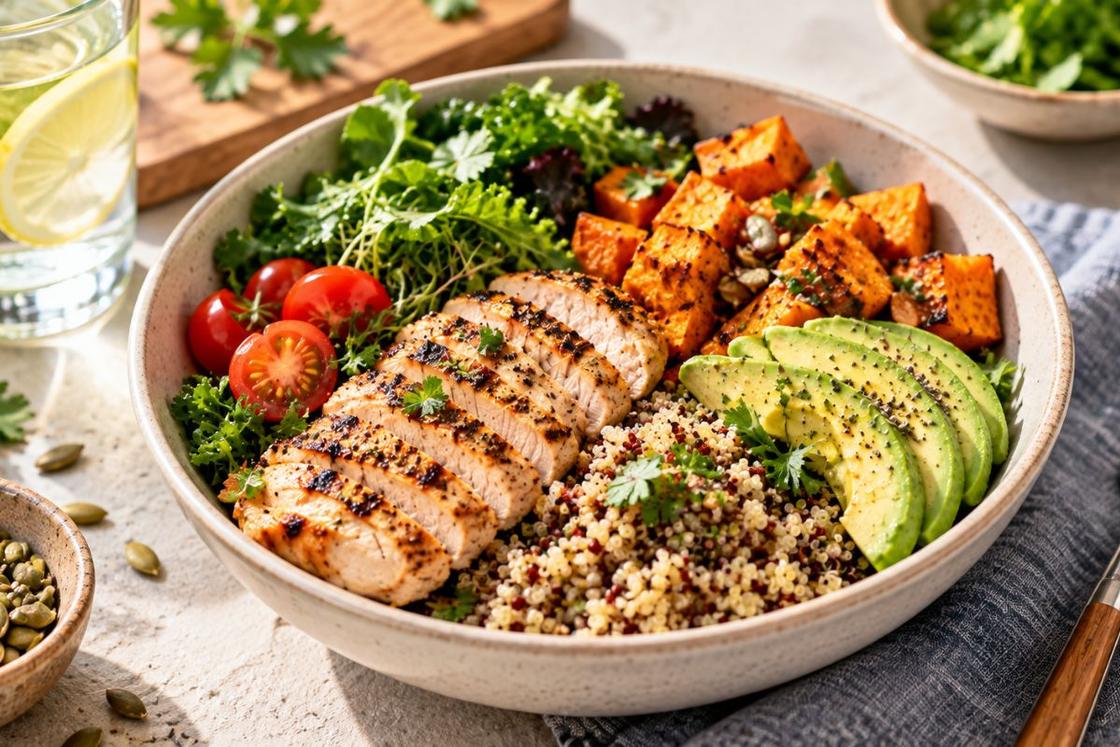
There isn't one natural replacement for a GLP-1 medication.
Instead, several habits can work together to support appetite, body composition, metabolic health, and long-term weight management.
1. Build Meals Around Protein
Protein is one of the first areas I look at when helping someone improve their nutrition.
Why?
Protein can help make meals more satisfying while supporting lean muscle during weight loss.
Good protein sources can include:
Eggs
Greek yogurt
Cottage cheese
Fish
Chicken
Lean meats
Beans and lentils
Tofu and other soy foods
That doesn't mean everyone needs to follow a high-protein diet or hit the same protein number every day.
Your needs depend on your body, activity level, age, health, goals, and the rest of your diet.
The bigger goal is making sure protein isn't an afterthought.
2. Eat Foods That Keep You Full
Trying to eat as little as possible isn't usually a good long-term strategy.
Instead, think about making your meals more satisfying.
One simple framework is:
Protein + vegetables + fiber-rich carbohydrate + healthy fat
For example, dinner might be grilled salmon, roasted vegetables, quinoa, and avocado or olive oil.
Lunch might be chicken or lentils with a large salad, beans, and a simple olive oil dressing.
Fiber-rich foods such as vegetables, fruits, beans, lentils, and whole grains can also help make meals more filling, which can be useful when you're trying to manage hunger while losing weight.
This type of meal gives you a combination of nutrients rather than leaving you hungry again shortly after eating.
Whole fruits, vegetables, whole grains, beans, lentils, nuts, seeds, lean proteins, and other nutrient-dense foods can all fit into a sustainable weight-management plan.
If you need some inspiration for what that can look like on your plate, check out my 20 Fat Burning Recipes for practical meal ideas.
3. Create a Calorie Deficit Without Crash Dieting
Natural weight loss still involves energy balance.
For most people, losing weight involves creating an energy deficit over time, meaning your body uses more energy than you take in.
But that doesn't mean you need to count every calorie or dramatically restrict your food.
You may be able to reduce your overall intake by making relatively simple changes:
Build meals around filling whole foods
Pay attention to portions
Reduce unnecessary liquid calories
Cut back on mindless snacking
Notice when you're physically hungry and when you're eating out of habit
Plan meals so convenience doesn't make every food decision for you
The goal isn't to create the biggest calorie deficit possible.
It's to create one you can actually maintain.
If your plan leaves you thinking about food all day, constantly hungry, or waiting for the diet to be over, that's worth paying attention to.
4. Strength Train to Protect Your Muscle

This is one area I believe deserves much more attention in conversations about weight loss.
Losing weight and improving body composition aren't necessarily the same thing.
If you're only watching the scale, you don't know how much of the change is coming from body fat versus lean tissue.
In my work with people who want to lose weight, I often see the number on the scale get much more attention than strength or body composition. But maintaining muscle matters, especially if your goal is to lose fat rather than simply weigh less.
Resistance training gives your muscles a reason to stay strong while you're working toward fat loss. Doing it 2 to 4 times a week, whether at home or in the gym, helps maintain muscle mass and metabolic rate during weight loss. That's one reason I combine nutrition and fitness rather than treating them as completely separate parts of weight management.
Current U.S. Physical Activity Guidelines recommend that adults include muscle-strengthening activity at least two days per week, along with regular aerobic activity.
That doesn't mean you have to become a bodybuilder.
Strength training can be adjusted to your starting point, abilities, and goals.
At Crossroads to Health, I also use body composition measurements to look beyond scale weight and track changes such as body fat and muscle mass. You can learn more about my approach to individual fitness training and body composition.
5. Move More Outside Your Workouts

Your workout matters.
So does what you do during the other 23 hours of your day.
You might exercise several times a week but still spend most of your workday sitting at a desk, in the car, or on the couch.
Everyday movement adds up. Aerobic activity burns calories and helps maintain weight loss.
That might mean:
Taking a walk after lunch for up to an hour a day to support weight loss and mental health
Walking while you're on a phone call
Taking the stairs
Gardening or doing yard work
Getting up regularly during your workday
Walking instead of driving for a short errand
Choosing active hobbies you actually enjoy
You don't have to become obsessed with reaching a particular step count or think movement only counts in a gym.
The Physical Activity Guidelines specifically encourage adults to move more and sit less, including at least 150 to 300 minutes of moderate-intensity aerobic activity per week, and even smaller amounts of activity can contribute to overall health.
Think less about hitting the perfect number and more about finding opportunities to move throughout your day.
6. Take Sleep and Stress Seriously

You can have a great nutrition plan and a well-designed exercise routine.
But they're much harder to follow when you're exhausted.
Getting enough sleep matters for more than feeling rested. Inadequate sleep can increase hunger hormone production, and because hormones help regulate appetite, food choices, exercise, and your ability to stick with healthy routines can all become harder to manage when you're consistently exhausted.
Think about what happens after a terrible night's sleep.
Are you excited to cook a balanced dinner and work out?
Or are you reaching for another coffee, craving something quick, and trying to make it through the afternoon?
Aim for 7 to 9 hours of quality sleep per night to help regulate hunger, and prioritizing around 8 hours can improve weight control.
Stress can create a similar challenge, especially because chronic stress can raise cortisol, which may increase appetite and promote fat storage, while also leaving you short on time, disrupting your sleep, or making it harder to stay consistent with meals and exercise.
That's why sleep and stress shouldn't be treated as completely separate from weight management.
Simple changes might include creating a consistent bedtime routine, giving yourself enough opportunity to sleep, stepping away from screens before bed when possible, and finding realistic ways to manage stress.
This isn't about blaming every stubborn pound on cortisol.
It's about recognizing that your lifestyle affects your ability to consistently make the choices you're trying to make.
7. Personalize Your Plan Instead of Following Someone Else's Diet
This might be the most important point on this list.
The plan that worked for your coworker, spouse, friend, or favorite person on social media may not be the right plan for you.
Your schedule is different.
Your food preferences are different.
Your exercise history, current fitness, health history, medications, previous dieting experiences, and goals may all be different.
I've been working in nutrition and fitness for more than 14 years, and one thing that experience continues to reinforce is that weight loss isn't one size fits all.
In my work with people at Crossroads to Health in Acton, I look at the person's actual schedule, eating habits, food preferences, fitness level, starting point, and goals rather than trying to fit everyone into the same program.
That's also why I look at nutrition and fitness together.
A theoretically perfect program isn't very useful if you can't realistically follow it, or if it doesn't have enough structure to work day to day. Long-term success is usually about steady progress you can sustain, not perfection.
Do Natural Weight-Loss Strategies Lead to Comparable Weight Loss as GLP-1 Medications?
This isn't really an apples-to-apples comparison.
GLP-1 medications and lifestyle-based weight-loss strategies aren't equivalent treatments.
I would be cautious of anyone promising that a particular supplement, food, or diet is going to give you the same effect as a prescription weight-loss medication.
A lifestyle-based approach works differently. Some people who stop glp 1s may notice increased hunger, so habits still matter; watch for that shift. It focuses on improving eating habits, building and maintaining muscle, increasing activity, supporting sleep, managing stress, and creating routines that can continue beyond the weight-loss phase.
And it doesn't have to be a choice between medication and healthy habits.
Someone taking a weight-loss medication still needs nutrition, movement, and other healthy habits. Someone who chooses not to use medication needs those foundations too.
The right medical treatment is a conversation to have with your doctor.
What About Supplements Marketed as “Natural Ozempic”?
If you've searched for natural alternatives to Ozempic, you've probably encountered supplements marketed alongside every new weight-loss drug and claiming to support GLP-1, blood sugar, appetite, or weight loss.
You may even have seen products described as “nature's Ozempic” or a “natural GLP-1.”
Those claims deserve some caution.
Check the original source behind a supplement claim before assuming it is credible.
No supplement should automatically be treated as a natural equivalent to a prescription GLP-1 medication.
Berberine is one example that gets a lot of attention. There is research examining its potential effects on body weight and metabolic markers, but the National Center for Complementary and Integrative Health notes that available weight-loss studies have limitations and inconsistent results. Berberine can also cause gastrointestinal side effects and interact with medications.
I discuss berberine and other strategies in more detail in my guide to natural GLP-1 alternatives for weight loss.
If you're considering a supplement, especially if you take medication or have a medical condition, speak with a doctor or another appropriate healthcare professional first.
What Does a Natural Weight-Loss Day Look Like?

Here's one example of how these habits might fit together. This isn't a prescribed meal plan, and your day doesn't need to look exactly like this.
Morning: Start with water and a breakfast containing protein and fiber. Maybe that's eggs with vegetables and whole-grain toast or Greek yogurt with berries, chia seeds, and nuts.
Midday: Build lunch around protein, vegetables, a fiber-rich carbohydrate, and healthy fat.
Afternoon: Get up from your desk and take a short walk or movement break.
Exercise: Depending on your schedule and program, this might be a strength-training day, cardio session, or another activity you enjoy.
Dinner: Have another balanced meal rather than heavily restricting food earlier in the day and arriving at dinner overly hungry.
Evening: Give yourself time to wind down and get adequate sleep.
Your portions, foods, exercise program, and schedule may look completely different.
That's fine.
The point is that sustainable weight loss often comes from doing relatively simple things consistently, not trying to discover one powerful weight-loss trick.
How Long Does It Take to Lose Weight Naturally?
There isn't one timeline that applies to everyone.
Your starting point, nutrition, body composition, activity, health, medications, sleep, stress, and consistency can all affect your progress, and the process can feel hard at times.
That's another reason I don't consider the scale the only measure of progress.
You may also notice changes in:
Waist measurements
Body composition
Strength
Exercise performance
Energy
How your clothes fit
Your consistency with healthy habits
The goal isn't simply to get the scale down as quickly as possible.
It's to make progress in a way you have a realistic chance of maintaining and keeping going long term.
When Should You Talk With a Healthcare Provider?
Lifestyle changes can be an important part of weight management, but they don't replace appropriate medical care.
Talk with your doctor if you're experiencing unexplained weight changes, have a medical condition that may affect your weight, or think one of your medications may be contributing.
You should also speak with an appropriate medical professional if you're considering prescription weight-loss medication.
And if you're currently taking Ozempic, Wegovy, Zepbound, or another prescription medication, don't stop taking it or change your dose based on something you read online.
Your doctor can help you understand what to watch for, including increased hunger after stopping medication, and whether it is safe to make changes.
Those decisions should be made with the doctor who prescribed it.
Natural Weight Loss Coaching in Acton, MA
If you've tried diet after diet and still feel like you're guessing about what your body needs, you may not need another generic weight-loss plan.
You may need a plan built around you.
At Crossroads to Health in Acton, Massachusetts, I combine functional nutrition and individualized fitness training to help people build sustainable habits around food, exercise, and everyday life.
I've worked in nutrition and fitness for more than 14 years. My background includes a master's degree from Eastern Kentucky University, Certified Nutrition Consultant training through Bauman College, ACE personal training certification, and functional medicine training through Dr. Dan Kalish and The Kalish Method.
Rather than handing everyone the same meal plan or workout, we'll look at where you are now, what you're struggling with, and what changes make sense for your goals, along with practical tips tailored to what you're trying to achieve.
Because natural weight loss isn't about finding a perfect diet.
It's about building a kind, realistic approach you can actually live with.
Ready to Build a Weight-Loss Plan You Can Actually Live With?
If you're looking for a natural approach to weight loss without relying solely on medication, let's talk about what personalized nutrition and fitness support could look like for you.
Schedule a consultation with Eric to get started.
Frequently Asked Questions
Can you lose weight without GLP-1 medications?
Yes. Weight loss is possible without GLP-1 medication.
A sustainable approach may include creating an appropriate calorie deficit, eating satisfying nutrient-dense foods, getting adequate protein, strength training, increasing everyday movement, getting enough sleep, and developing habits you can maintain; for some people, lifestyle change can produce meaningful or even comparable weight loss over time, though it works differently than medication.
Healthy eating, physical activity, and behavioral support are established components of weight-management programs.
What is the best natural alternative to Ozempic for weight loss?
There isn't one food, supplement, or lifestyle strategy that should be considered a natural equivalent to Ozempic. Many experts would be cautious about any product described that way.
A lifestyle-based approach may instead combine nutrition, physical activity, strength training, sleep, and other habits that support long-term weight management.
Can you increase GLP-1 naturally?
Food intake, nutrients, exercise, and other physiological factors can influence the body's natural GLP-1 response, but that doesn't mean their effects are equivalent to prescription GLP-1 medications.
You can read more about this in my guide to GLP-1 alternatives and natural weight-loss strategies.
What should I eat to lose weight without medication?
Rather than looking for one perfect weight-loss food, build meals around protein, vegetables and other fiber-rich foods, minimally processed carbohydrate sources, and appropriate amounts of healthy fats.
Your portions and overall intake should be personalized to your body, activity, health, and goals.
Is strength training or cardio better for weight loss?
You don't necessarily need to choose one.
Aerobic exercise supports cardiovascular fitness and contributes to overall activity and energy expenditure, while resistance training helps improve strength and maintain muscle.
U.S. physical activity guidelines recommend that adults include both aerobic activity and muscle-strengthening activity.
How can I lose weight without Ozempic?
You don't need to find a single replacement for Ozempic. Some people may tap GLP-1s for extra help, while others prefer to focus on lifestyle habits or cannot tolerate the medications.
A lifestyle-based approach to weight loss generally focuses on creating a sustainable calorie deficit while supporting fullness, maintaining muscle, staying physically active, getting adequate sleep, and building eating and exercise habits you can maintain.
What this kind of plan should look like depends on your health, starting point, lifestyle, and goals.
About Eric Reardon
Over more than 14 years in nutrition and fitness, Eric Reardon has learned how healthy eating and effective training work together to support lasting results. He holds a master's degree from Eastern Kentucky University, completed Certified Nutrition Consultant training through Bauman College, is an ACE Certified Personal Trainer, and received functional medicine training through Dr. Dan Kalish and The Kalish Method.
At Crossroads to Health in Acton, Massachusetts, Eric combines individualized nutrition and fitness coaching to help people develop a safe, practical, sustainable approach to improving their health, fitness, and weight-management habits.
Learn more about Eric and Crossroads to Health.